Most hotels operate with unwritten service standards. Employees pick up habits from coworkers, managers correct mistakes as they happen, and "the way we do things" gets passed down inconsistently from shift to shift.
The result? Service quality depends entirely on who's working that day.
Below are ten guest service standards that every hotel should formally train, but most don't. These aren't obscure hospitality secrets. They're foundational practices that directly impact guest satisfaction, reviews, and repeat business. The issue isn't that hotels don't care about these standards, it's that they assume employees will learn them through osmosis.
They won't.
1. The First 30 Seconds of Guest Interaction
What it is: The greeting protocol: eye contact, smile, using the guest's name, setting a welcoming tone before diving into transactions.
Why it's not trained: Most managers assume this is intuitive or personality-based. "Just be friendly" is as far as the instruction goes.
The cost of not training it: Guests judge your entire property in the first 30 seconds of contact. A distracted, transactional greeting, even if the rest of the stay is perfect it sets a tone that's hard to recover from. Conversely, a warm, attentive greeting can offset later issues.
Formal training in effective communication and rapport-building ensures every team member understands how to create that critical first impression, regardless of their natural temperament.
2. How to Handle Guest Complaints Without Escalation
What it is: A structured approach to service recovery: listening, empathizing, apologizing, solving, and following up, without immediately calling a manager.
Why it's not trained: Hotels often tell employees to "get a manager if there's a problem" because they don't trust untrained staff to resolve complaints appropriately.
The cost of not training it: Every complaint that escalates unnecessarily wastes manager time and signals to guests that your frontline staff isn't empowered. Worse, delayed resolution frustrates guests further. Most complaints are resolvable at the front desk or housekeeping level if employees know the framework.
Training your team in customer-centric hospitality principles gives them the confidence and tools to recover service failures independently.
3. Proactive Upselling (Without Being Pushy)
What it is: Offering upgrades, late checkouts, early check-ins, or premium services in a way that feels helpful, not salesy.
Why it's not trained: Employees either avoid upselling entirely because it feels awkward, or they push too hard and annoy guests. Neither approach works.
The cost of not training it: You're leaving revenue on the table daily. A guest who would have happily paid $30 for a late checkout never hears the option. Another guest books an upgrade with your competitor because your agent didn't mention availability. These missed opportunities add up to thousands of dollars annually.
4. Consistent Check-In and Check-Out Flow
What it is: A step-by-step process for check-in and check-out that ensures every guest receives the same information, WiFi password, breakfast hours, parking details, checkout time, incidental charges explained clearly.
Why it's not trained: It seems too basic to formalize. Managers assume everyone knows what to cover.
The cost of not training it: Guests receive incomplete or inconsistent information. One agent mentions breakfast; another doesn't. One explains parking fees upfront; another leaves it as a surprise at checkout. These inconsistencies create confusion, complaints, and negative reviews.

5. ADA Compliance and Accessibility Service
What it is: Understanding ADA requirements, knowing how to assist guests with disabilities respectfully, and proactively offering accommodations.
Why it's not trained: Most properties assume legal compliance is enough and don't train staff on the service side, how to communicate with guests who have hearing, vision, or mobility challenges without being patronizing or awkward.
The cost of not training it: Poor service to guests with disabilities leads to negative reviews, legal risk, and a reputation for being unwelcoming. More importantly, it's the right thing to do, and untrained staff often want to help but don't know how.
6. Crisis and Emergency Protocols
What it is: Knowing how to respond to fires, medical emergencies, severe weather, security threats, or guest crises without panicking or making things worse.
Why it's not trained: Hotels conduct fire drills but rarely train staff on communication during a crisis, de-escalation techniques, or what to do when a guest has a medical emergency.
The cost of not training it: In a real emergency, untrained staff freeze, overreact, or make decisions that endanger guests or themselves. Even minor crises like a guest having a panic attack or a small kitchen fire are handled poorly when there's no protocol.
Crisis Management and Safety Protocols training prepares your team to respond calmly and effectively when things go wrong.
7. Cultural Awareness and Inclusive Service
What it is: Understanding cultural differences in communication, personal space, dining preferences, and service expectations so you can serve international and diverse guests respectfully.
Why it's not trained: It's uncomfortable to discuss and feels like it should be "common sense." But cultural norms vary widely, and what feels polite in one culture can feel rude in another.
The cost of not training it: You inadvertently offend guests or provide poor service because your team doesn't understand their expectations. A guest from a culture that values indirect communication feels pressured by overly aggressive upselling. A guest with specific dietary or religious needs feels misunderstood.
Training in cultural awareness and diversity helps your team serve every guest appropriately and with respect.
8. Room Readiness Standards and Inspection Criteria
What it is: A clear definition of what "clean and ready" means, down to pillow placement, bathroom checks, amenity stocking, and quality control.
Why it's not trained: Housekeeping learns through shadowing, and standards vary by supervisor. One housekeeper believes rooms are ready when they "look clean." Another has a detailed mental checklist.
The cost of not training it: Guests discover missing towels, dirty glasses, or overlooked maintenance issues. Your front desk fields complaints, rooms get pulled offline, and you're constantly inspecting or redoing work that should have been right the first time.
9. Lost and Found, Guest Belongings, and Privacy Protocols
What it is: A clear process for handling items left behind, entering guest rooms, protecting guest privacy, and managing sensitive situations.
Why it's not trained: These situations feel rare or self-explanatory, so formal training is skipped. Employees improvise when they encounter them.
The cost of not training it: A housekeeper enters a guest room without knocking properly. A front desk agent gives out a guest's room number over the phone. A lost item isn't documented, and the guest accuses the property of theft. Small lapses in protocol can have serious legal and reputational consequences.
10. The Art of Going Above and Beyond
What it is: Creating memorable, personalized guest experiences, not through expensive gestures, but through thoughtfulness, attention to detail, and creative problem-solving.
Why it's not trained: It's seen as optional or something only luxury properties do. Most hotels focus on meeting basic expectations and assume "above and beyond" will happen naturally if employees care.
The cost of not training it: You blend into the sea of average hotels. Guests leave satisfied but not delighted, and they don't remember you when booking their next trip. The properties that do train this skill create loyal guests who return and refer others.
The Art of Going Above and Beyond – Unreasonable Hospitality course teaches your team how to elevate everyday service into something guests talk about long after checkout.
Building a Training System That Actually Works

If you're recognizing gaps in your property's training, you're not alone. Most hotels know these standards matter, they just don't have the time or resources to build formal training around them.
That's where a structured system makes all the difference.
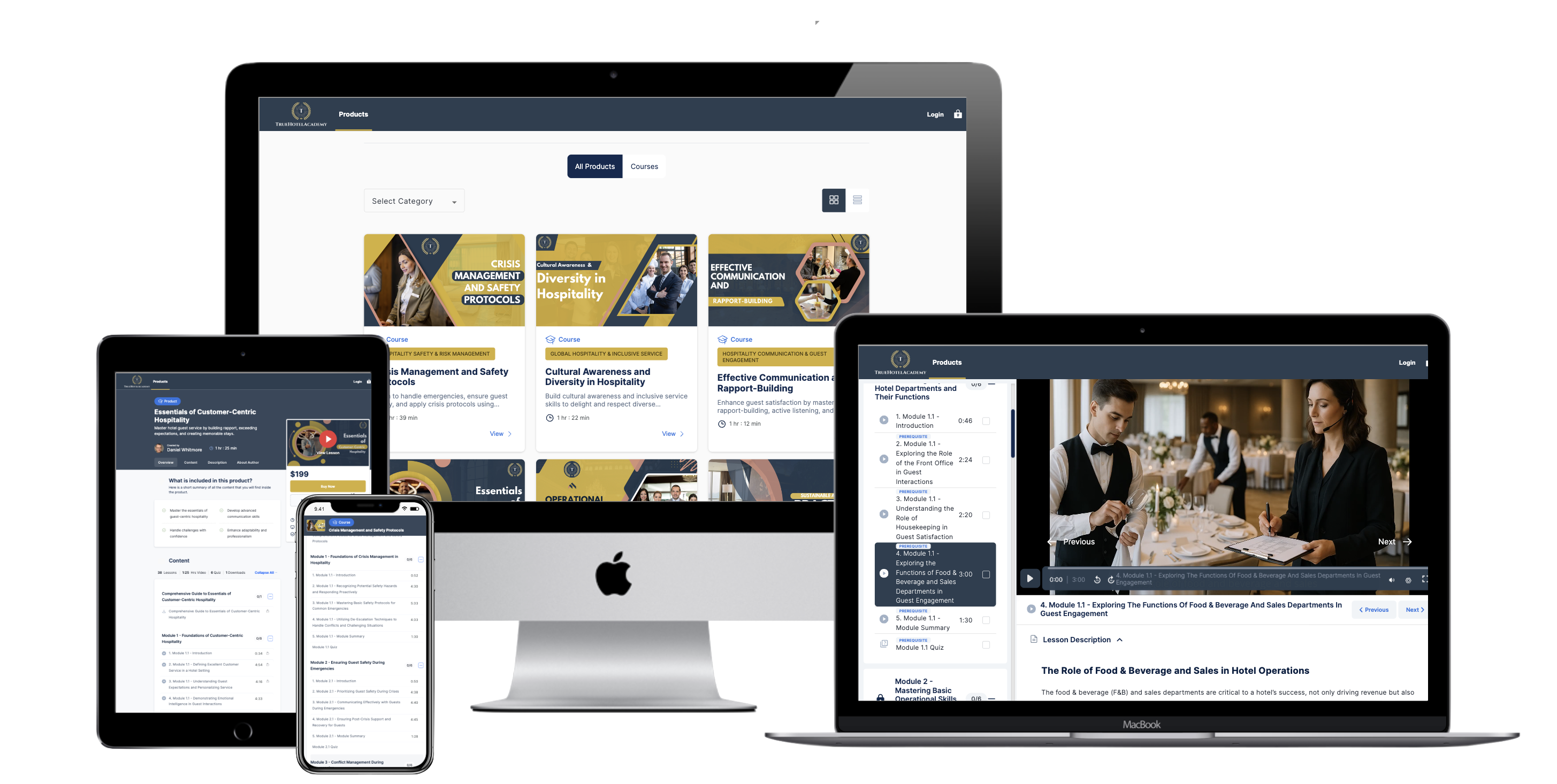
The Complete Hotel & Guest Service Mastery Bundle brings together all seven core hospitality training courses into a single, comprehensive solution for hotel teams. It covers customer-centric service, communication, crisis management, cultural awareness, operational fundamentals, sustainability practices, and the art of unreasonable hospitality, all the standards outlined above and more.
Designed specifically for busy hotel operations, the bundle is self-paced, online, and practical. Your team can complete foundational training before their first shift, and experienced employees can strengthen skills without disrupting schedules. With fifteen team licenses included, your entire staff learns from the same framework and delivers the same standards.
If your property only needs targeted training in specific areas, you can explore individual courses and build your training plan one standard at a time. Either way, the investment is the same: clearer expectations, more confident employees, better guest experiences, and less time spent fixing preventable problems.
Training these ten standards shouldn't be optional. They're the foundation of consistent, professional service and they're exactly what separates memorable properties from forgettable ones.
Explore the Complete Hospitality Mastery Bundle or browse individual courses to start building the service standards your property needs.