You just hired someone to start Monday. It's Friday afternoon. You're already short two people this weekend, and you haven't planned a single thing for onboarding because there hasn't been time.
So you'll do what you always do: show them where things are, pair them with whoever's working, and hope they pick things up fast.
This is how most hotels onboard new employees. Not because it's a good system, but because there's no time to do it any other way.
The problem is that "hope they figure it out" isn't onboarding. It's damage control. And the cost of that approach shows up later in mistakes, turnover, and the need to hire again three months from now.
Here's the reality: you don't have time to build a comprehensive onboarding program from scratch. But you also can't afford to keep cycling through employees who leave because they never felt prepared.
What you need is something simple, structured, and repeatable. Something you can hand to any new hire in any department and know they'll get the basics right.
That's what this 3-day framework is designed to do.
Why Onboarding Breaks Down in Busy Hotels
Onboarding fails for the same reason most training fails in hotels: it's reactive instead of systematic.
You're juggling call-outs, guest issues, maintenance problems, and 15 other operational fires. A new employee starts, and you give them whatever attention you can squeeze between everything else. If you have a slow morning, maybe you walk them through more details. If it's busy, they get the abbreviated version.
The result is inconsistent onboarding that varies wildly depending on who trains them and what's happening that day. One new hire gets three hours of orientation. Another gets 30 minutes and a good luck handshake.
Then you wonder why service quality is all over the place and why turnover is so high.
The issue isn't effort. It's the lack of a repeatable system that works whether you have time or not.
The Hidden Cost of "Figure It Out" Onboarding
When new employees don't receive structured onboarding, several expensive things happen.
They take longer to become functional. An employee who gets proper onboarding is confident and productive within days. An employee who's left to figure things out takes weeks to reach the same level, and they make more mistakes along the way. Every mistake requires manager time to fix.
Manager interruptions never stop. Without clear training, new hires ask constant questions. "Where are the extra towels?" "How do I handle this charge?" "What do I say to a guest who wants late checkout?" These aren't complex questions, but answering them 20 times a day prevents you from doing anything else.
Guest experience suffers immediately. A poorly onboarded employee is visibly uncertain. Guests notice hesitation, inconsistency, and lack of confidence. It shows up in reviews, repeat bookings, and your property's reputation.
Turnover accelerates. Employees who feel unprepared and unsupported quit. Now you're hiring again, onboarding again, and repeating the same broken cycle. The cost of replacing a hotel employee typically runs $3,000 to $5,000 when you factor in recruiting, lost productivity, and training time.
None of this is necessary. You just need a system.
Why 3 Days Is the Right Framework
Three days isn't arbitrary. It's the minimum time needed to give someone a solid foundation without overwhelming them or taking you off the floor for a week.
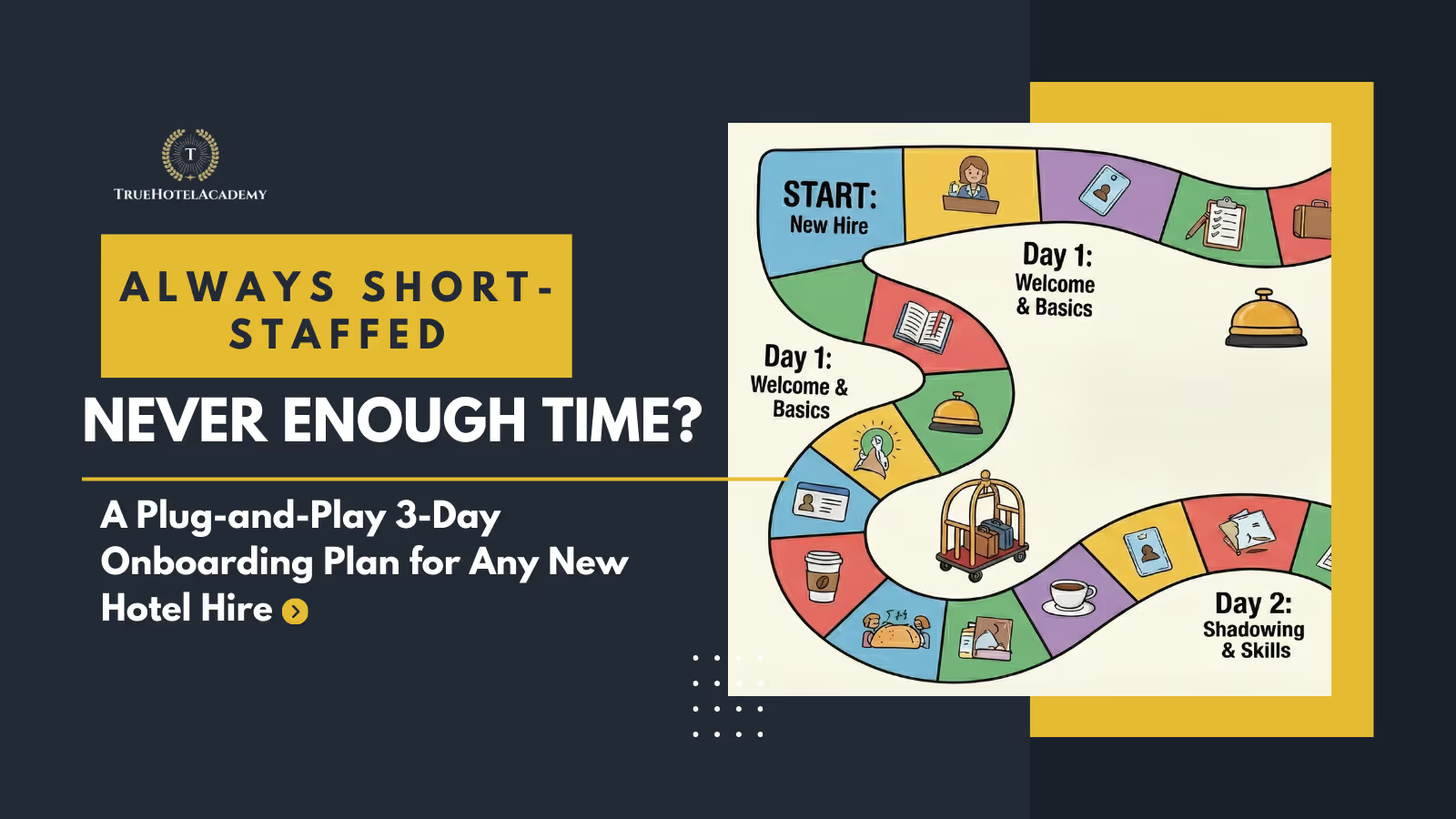
Day 1 covers orientation and core standards. Day 2 builds role-specific skills and confidence. Day 3 integrates them into real operations with support nearby.
It's enough structure to create competence and consistency. It's short enough to implement even when you're understaffed.
And because it's the same framework for every hire, it becomes repeatable. You're not reinventing onboarding every time someone starts. You're plugging them into a system that already works.
The 3-Day Plug-and-Play Onboarding Framework
Here's what this looks like in practice, adaptable across any hotel role.
Day 1: Orientation and Core Standards
The first day is about context. Your new hire needs to understand the property, the guest experience, and the service standards before they start doing tasks.
Morning: Property walkthrough and guest perspective. Show them the entire property from a guest's point of view. Where are rooms located? What amenities do you offer? What do guests see when they arrive? This builds spatial awareness and helps them answer basic guest questions confidently.
Afternoon: Core service standards and expectations. This is where you explain what excellent service looks like at your property. How do we greet guests? What's our standard for responsiveness? How do we handle problems? What are the non-negotiables?
If you're using structured training like the Complete Hotel & Guest Service Mastery Bundle, this is when new hires complete foundational modules on customer-centric hospitality and communication. They learn principles, not just procedures.
End of day: Systems and tools overview. Show them the PMS, phone system, housekeeping software, or maintenance logs (depending on role). Don't expect mastery. Just make sure they know where things are and how to access basic functions.
Day 2: Role-Specific Skills and Confidence Building
Day two is when they start learning their actual job. The focus is on building competence in the tasks they'll do most often.
Front desk: Practice check-ins and checkouts. Run through common scenarios (early arrival, late checkout, billing questions). Let them handle simulated transactions until the process feels natural. Teach them how to offer upgrades, explain policies, and handle routine questions without escalating to management.
Housekeeping: Walk through room cleaning standards step by step. Show them your inspection criteria, how you want beds made, what supplies go where, and how to report maintenance issues. Let them clean a room with supervision and feedback so they know what "ready" actually means.
Maintenance: Explain your preventive maintenance schedule, how work orders are prioritized, what tools and supplies are where, and which issues require immediate attention versus routine fixes. Walk them through your most common tasks so they understand the rhythm of the role.
Food & beverage (if applicable): Cover setup procedures, service standards, guest interaction expectations, and how to handle dietary restrictions or special requests. Practice scenarios so they're not improvising during a busy breakfast shift.
The key is repetition and clarity. They should practice enough to feel capable, not just watch someone else do it once.
Day 3: Integration with Support
Day three is the bridge between training and real operations. Your new hire is now working their actual role, but with backup close by.
They're handling real guests, real tasks, and real situations. But they're not alone. A supervisor or experienced coworker is nearby to answer questions, provide guidance, and step in if something gets complicated.
This is when gaps become visible. Maybe they're confident with check-ins but hesitant about handling complaints. Maybe they know the cleaning standard but aren't sure how to report a maintenance issue. You identify these gaps and address them immediately instead of discovering them three weeks later.
By the end of day three, your new hire should feel capable of handling their core responsibilities independently. Not perfect, but confident.
How This Framework Reduces Manager Burden
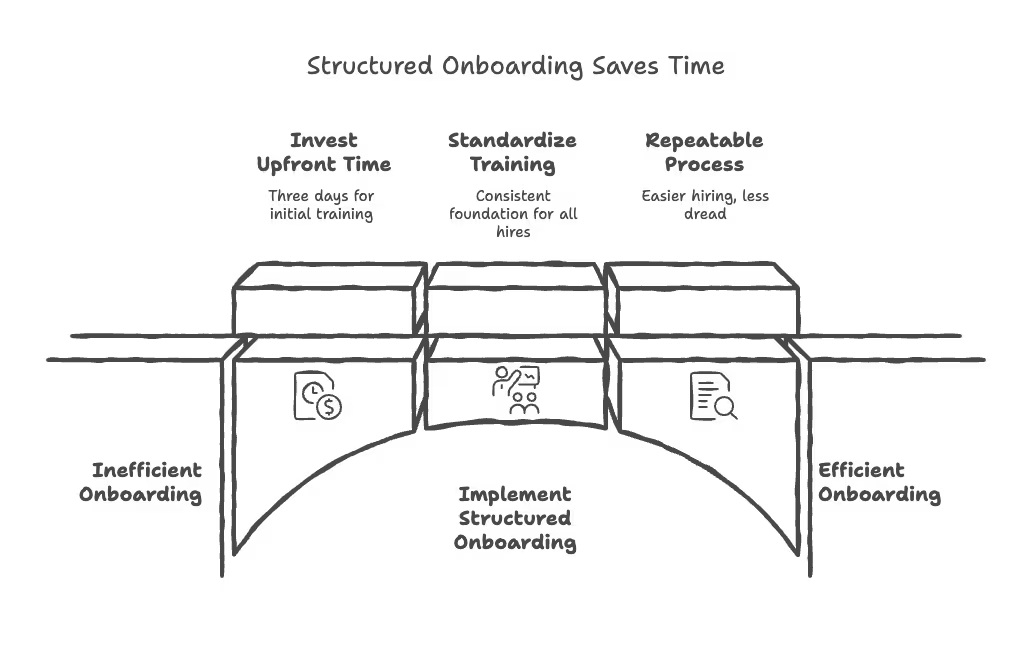
Here's what most managers miss: structured onboarding saves time, it doesn't cost time.
Yes, you invest three days upfront. But that investment pays back immediately because your new hire stops needing constant supervision.
They know the standards. They've practiced the tasks. They understand when to handle something themselves and when to escalate. Your interruptions drop from 30 per day to five.
When everyone goes through the same onboarding, service becomes consistent across shifts. You're not correcting individual habits because everyone learned the same foundation.
And when onboarding is repeatable, hiring gets easier. You're not dreading the next new employee because you already know how you'll train them.
Making This Work Across Departments
This framework adapts to any role because the structure stays the same. Only the content changes.
Day 1 is always orientation and standards. Day 2 is always role-specific skills. Day 3 is always supervised integration.
A front desk hire and a housekeeping hire both follow the same three-day flow. The property walkthrough is identical. The service standards are identical. The role-specific training on Day 2 is different, but the framework is the same.
This consistency makes onboarding scalable. You're not creating custom plans for every position. You're plugging people into a system that works universally.
The Onboarding Backbone You Don't Have to Build
If you're reading this and thinking, "This makes sense, but I don't have time to create all the training content," you're not alone.
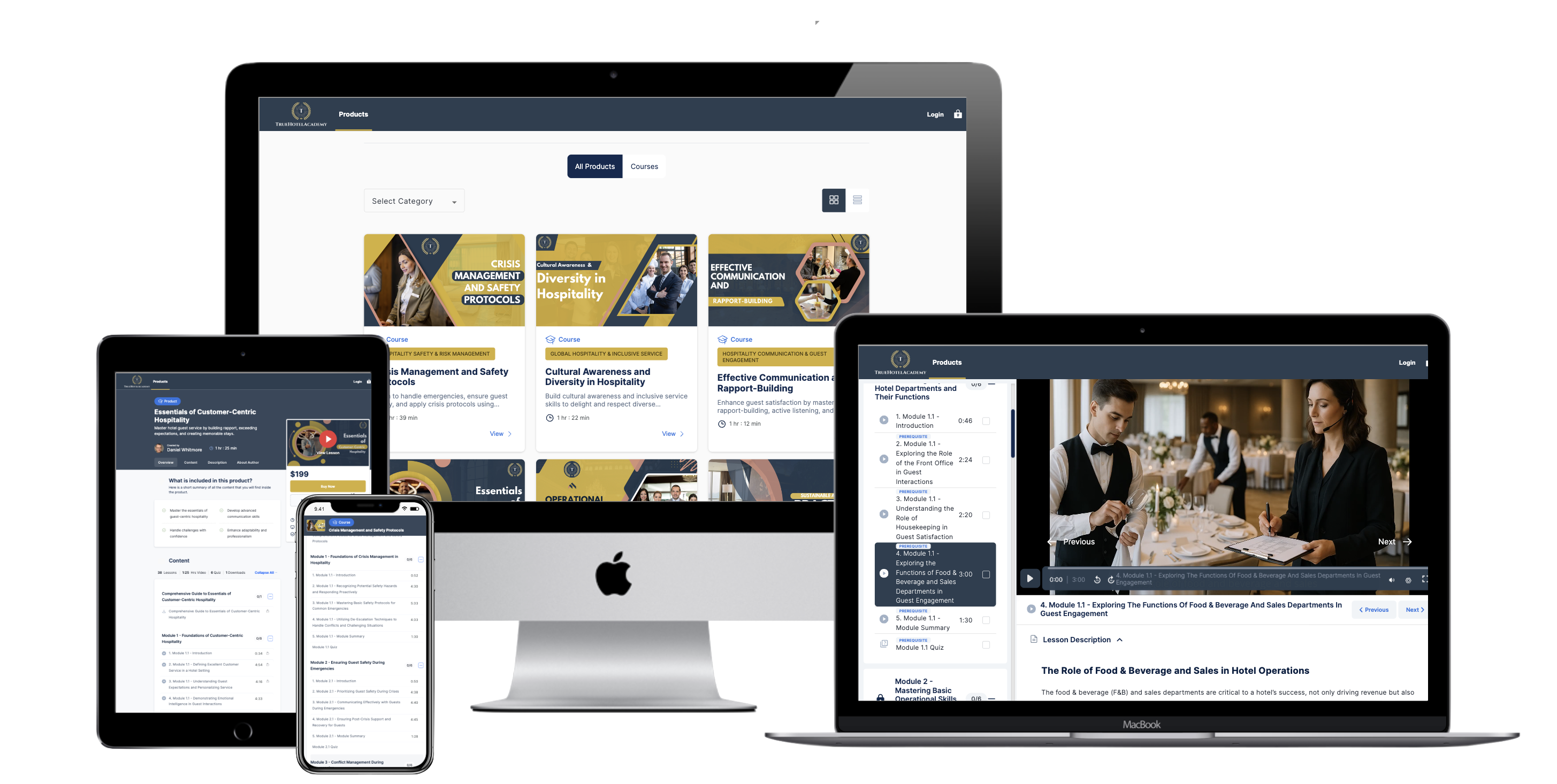
The Complete Hotel & Guest Service Mastery Bundle was designed specifically to be the backbone of this kind of onboarding system. It provides comprehensive, self-paced training on customer-centric hospitality, communication and rapport-building, operational fundamentals, crisis management, cultural awareness, and going above and beyond.
New hires complete foundational modules during their first three days, building the service standards and skills your property needs without requiring constant manager oversight. The bundle includes 15 team licenses, so you can onboard every new hire throughout the year using the same framework.
It's not a replacement for showing them where the linen closet is or how your PMS works. It's the structured training that ensures they understand guest service principles, communication skills, and professional standards before they ever interact with a guest.
Your role becomes coaching and refinement instead of teaching everything from scratch. The training happens independently. You focus on integration and support.
When onboarding is structured, repeatable, and backed by actual training content, new hires get up to speed faster, feel more confident, and deliver better service from day one.
Explore the Complete Hospitality Mastery Bundle and see how it becomes the onboarding system you don't have time to build but desperately need.
You'll always be short-staffed. That's the reality of hotel operations right now. But you don't have to keep cycling through employees who leave because they were never set up to succeed.
Three days. A clear framework. Structured training. That's all it takes to turn onboarding from chaos into a system that actually works.