Every hotel manager knows the feeling: you turn your back for five minutes, and suddenly a guest is checking in without being offered early luggage storage, or housekeeping skips the turndown service because "no one told them to do it today."
The natural response? More oversight. More checklists. More hovering.
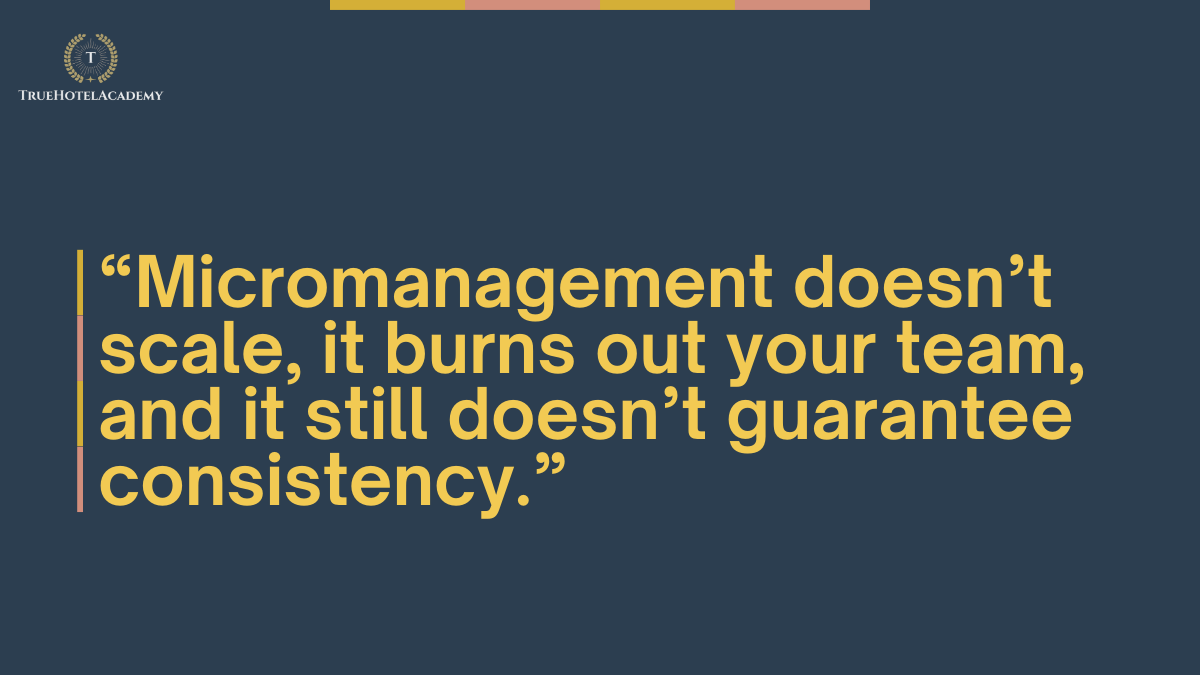
But here's the problem: micromanagement doesn't scale, it burns out your team, and it still doesn't guarantee consistency. The front desk agent who performs beautifully when you're standing there might revert to shortcuts the moment you step into the back office. Worse, good employees start to resent the constant supervision and leave for properties that trust them.
So how do you maintain high service standards without hovering over every interaction? The answer isn't tighter control. It's better systems.
Why Micromanagement Fails in Hotels
Hospitality is a people business, which makes it uniquely resistant to command-and-control management. Your team isn't assembling widgets on a factory line, they're reading guests, responding to unpredictable situations, and making dozens of judgment calls every shift.
When you micromanage, three things happen:
First, your employees stop thinking. They wait for instructions instead of solving problems, because they've learned that initiative gets corrected. A housekeeper who notices a flickering light bulb won't report it, since she wasn't explicitly told to check light bulbs.
Second, you become the bottleneck. Every decision, every exception, every unusual request has to flow through you. You can't take a day off. You can't focus on revenue management or guest relations because you're too busy being everyone's supervisor.
Third, you lose your best people. Talented hospitality professionals don't stick around to be babysat. They go to properties where they're trained well and then trusted to execute.
The Real Difference Between Control and Standards
Here's what most managers get wrong: they think standards and control are the same thing. They're not.
Control means watching every transaction, correcting every misstep, and inserting yourself into routine operations. It's exhausting and it doesn't work long-term.
Standards mean establishing clear expectations, training your team thoroughly, and then stepping back to let them deliver. It's the difference between telling someone exactly how to greet a guest every single time versus training them on the principles of a warm welcome and trusting them to execute it in their own authentic way.
Think about the best luxury hotel brands. They're not micromanaged, they're systematized. A front desk agent at a Ritz-Carlton property doesn't need someone standing over their shoulder because they've been trained on the service philosophy, they understand the standards, and they have the authority to solve guest issues up to a certain dollar amount. The system works because the training came first.
How Standardized Training Actually Reduces Your Workload
This is the part that surprises managers who are used to running lean: investing in real training actually frees up your time.
When your team is properly trained on service standards, complaint resolution, communication techniques, and operational basics, they stop coming to you with every question. They handle routine situations confidently because they've practiced them. They recover from service failures without escalation because they know the framework.
Consider what happens when you train your front desk team on effective communication and rapport-building. Instead of mechanically processing check-ins, they learn to read guest cues, anticipate needs, and create positive moments. When a guest is frustrated about a room type issue, your agent doesn't panic and grab you they know how to empathize, offer solutions, and document the issue properly. You're not putting out fires all day because fewer fires start in the first place.
Or take housekeeping. Without clear training, you get inconsistent room inspections, missed standards, and constant redos. With systematic training on cleaning protocols, quality checks, and guest privacy standards, your housekeeping team knows exactly what "inspection-ready" means. Your head housekeeper isn't walking every room, she's spot-checking and coaching, because the foundation is solid.
Real-World Examples of Systems Over Supervision
Let's get specific. Here are scenarios that repeat in hotels everywhere, and how standardized training changes the equation:
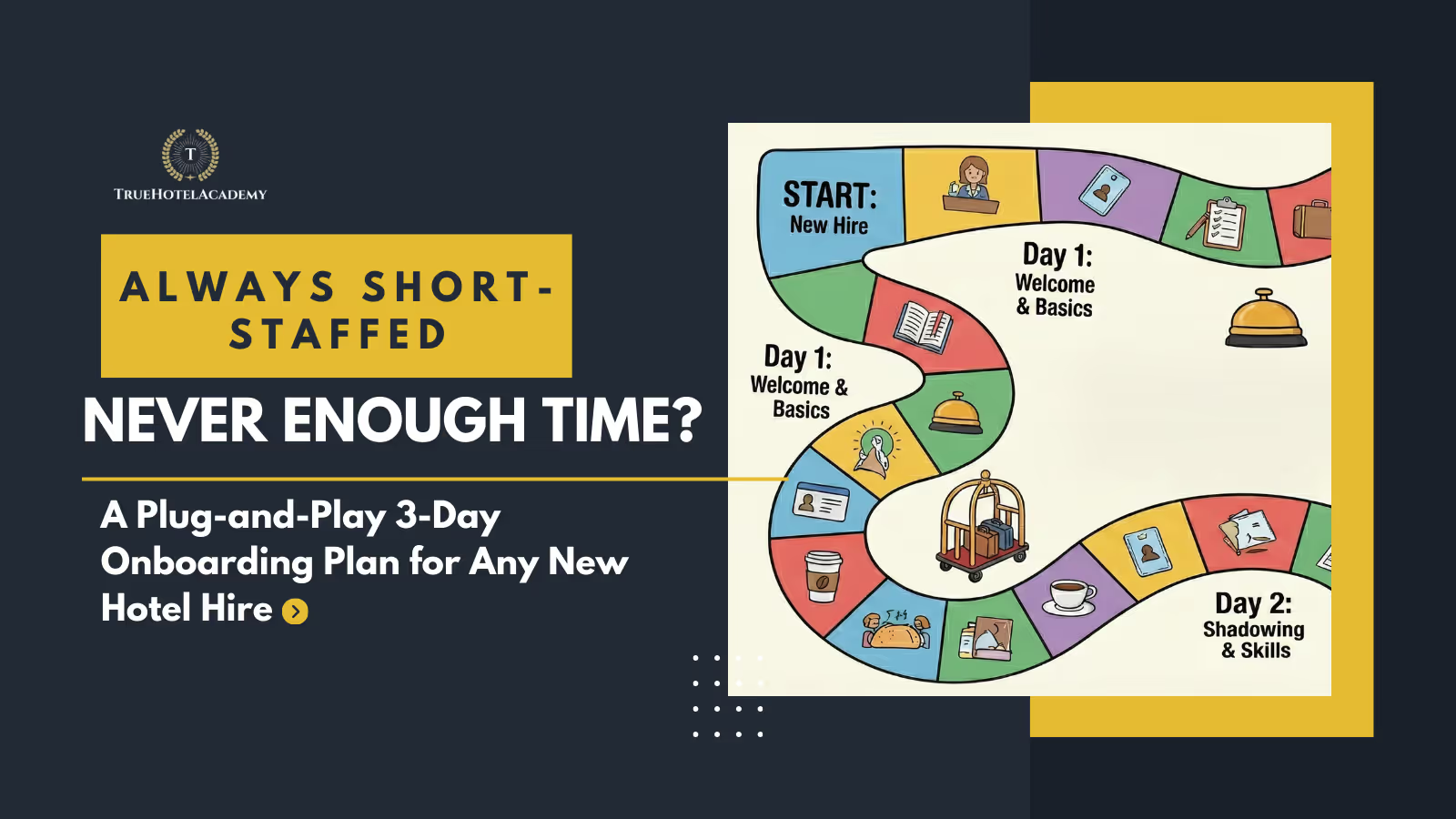
The New Hire Problem: Without a structured onboarding process, you're shadowing new employees for weeks, answering the same questions repeatedly, and still discovering knowledge gaps months later. With a comprehensive training system, new hires complete foundational courses before their first shift. They arrive with baseline knowledge of guest service principles, crisis protocols, and operational fundamentals. You're coaching and refining, not teaching from scratch.
The Guest Complaint Loop: Guests don't complain at convenient times. They complain at 11 p.m. when you're off-property, or during a Sunday breakfast rush. If your team hasn't been trained in service recovery, every complaint becomes an escalation. If they have been trained, if they understand how to listen, apologize genuinely, solve problems within guidelines, and follow up, they handle it. You review it later, but you're not being called in on your day off.
The Inconsistent Experience: You have one front desk agent who's warm and proactive, and another who's efficient but cold. Without standardized training in customer-centric hospitality, you get wildly different guest experiences depending on who's working. With it, both agents understand the service expectations and deliver consistently in their own style.
The Culture Issue: High turnover isn't just about pay. It's often about feeling unprepared, unsupported, or unclear on expectations. When you invest in training your team, when you show them that you're committed to their development and not just their output, retention improves. Employees who feel competent and confident stay longer.
Building Repeatable Systems Your Team Will Actually Use
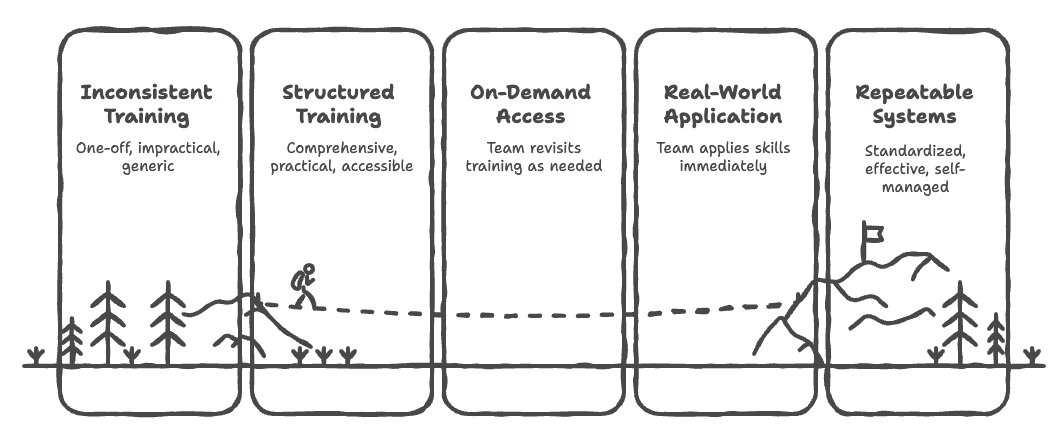
The keyword here is repeatable. One-off training sessions where you talk at your staff for an hour don't create lasting change. Neither do dense operations manuals that no one reads.
Effective standardization requires training that's practical, accessible, and designed for real hotel operations. Your team should be able to complete it on their schedule, revisit it when needed, and actually apply it the next day.
This is where many hotels stumble. They know they need better training, but they're overwhelmed trying to create it themselves or paying for generic customer service programs that don't speak to the specific realities of hospitality work.
What works is structured training that covers the full spectrum: guest service fundamentals, communication skills, crisis management, operational basics, cultural awareness, sustainability practices, and the art of going above and beyond. When your team has been through this kind of comprehensive development, they don't need you to manage every detail. They have the tools to manage themselves.
From Manager to Leader
Here's the shift that happens when you move from micromanagement to standardized systems: you stop being a taskmaster and start being a leader.
Instead of correcting every small mistake, you're coaching for improvement. Instead of answering the same questions daily, you're focused on strategic issues, guest satisfaction trends, revenue optimization, staff development, or that renovation project you've been putting off.
Your team feels more capable and more valued. Guests notice the difference when they're served by confident employees instead of nervous ones waiting for approval.
And you? You get to leave the property without your phone exploding. You get to focus on the work that actually moves the business forward.
Ready to Standardize Without the Micromanagement?
If you're tired of being the only person who knows how things should be done, if you're ready to build a team that delivers consistent, high-quality service without constant supervision, it starts with the right training foundation.
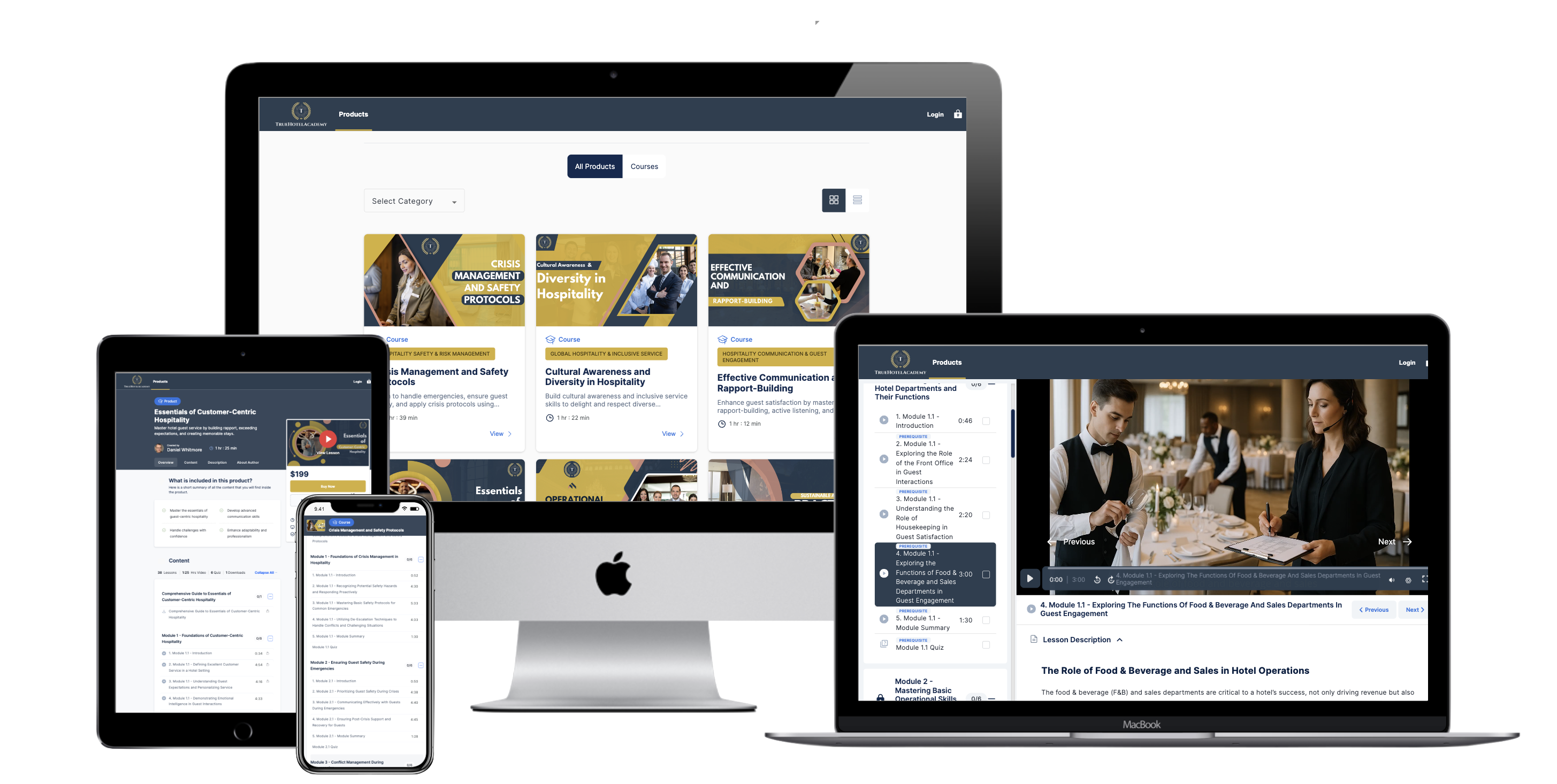
The Complete Hotel & Guest Service Mastery Bundle was built specifically for hotel operations teams who need practical, repeatable systems. It includes seven comprehensive courses covering everything from customer-centric hospitality and effective communication to crisis management and operational fundamentals.
Designed for properties that need consistency but can't afford to micromanage, the bundle gives you a structured training system your entire team can use. It's self-paced, accessible online, and built for the realities of hotel work not generic theory.
Fifteen team licenses are included, so you can train your front desk, housekeeping, management, and new hires all within the same framework. Your team learns the same standards, speaks the same language, and delivers the same level of service.
You'll spend less time hovering and more time leading. Your team will feel more confident and capable. And your guests will notice.
Explore the Complete Hospitality Mastery Bundle and see how standardized training creates the consistency you need without the micromanagement you don't.