Most hotel operators believe they deliver good service. And they probably do, sometimes. The question isn't whether your property can deliver great guest experiences. It's whether you deliver them consistently.
Inconsistency is difficult to see from the inside. You notice when things go wrong, but you rarely witness the subtle variations that guests experience depending on which shift is working, who handles their check-in, or how a particular employee happens to be feeling that day.
This self-check isn't about auditing your operation or exposing weaknesses. It's about honestly evaluating whether your guest experience is reliably excellent or reliably unpredictable.
How to Use This Self-Check
For each section below, ask yourself the questions provided. If you hesitate, qualify your answer, or think "it depends," that's a signal of inconsistency. The goal isn't perfection, it's awareness. Once you see the gaps, you can address them systematically.
Section 1: First Impressions and Greetings
Self-Check Questions:
If ten guests checked in across different shifts this week, would they describe the greeting experience similarly?
Can you confidently say that every employee, regardless of department knows how to greet guests warmly and professionally?
What inconsistency looks like:
One front desk agent makes eye contact, smiles, uses the guest's name, and sets a welcoming tone. Another agent is efficient but transactional, polite, but forgettable. A housekeeper passes a guest in the hallway and says nothing, while another stops to ask if they need anything.
Guests notice these differences. They don't think, "Oh, that's just Sarah's personality." They think, "This hotel doesn't have its act together."
If you paused on these questions, your team may need structured training in effective communication and rapport-building to create consistent first impressions.
Section 2: Consistency Across Shifts and Departments
Self-Check Questions:
If a guest checks in during the day shift and has a question for the night shift, will they receive the same quality of service and information?
Do your housekeeping, front desk, and maintenance teams operate with the same service standards, or does quality vary by department?
What inconsistency looks like:
A guest asks the morning front desk agent about late checkout and is told, "Of course, we can do 1 p.m. for you." That evening, they ask the night auditor about extending to 2 p.m. and are told, "That's not our policy." The guest is confused and frustrated not because of the policy, but because they received conflicting information.
Or: Your front desk team is polished and professional, but housekeeping barely acknowledges guests in the hallways. Your property feels disjointed because departments operate in silos with different standards.
Consistency across shifts and departments requires everyone to learn the same foundations in customer-centric hospitality.
Section 3: Handling Guest Complaints and Exceptions
Self-Check Questions:
If three different employees received the same guest complaint, would they handle it similarly?
Do your team members know when to resolve issues independently versus when to escalate to management?
What inconsistency looks like:
A guest complains that their room wasn't cleaned properly. One housekeeper apologizes and offers to re-clean immediately. Another says, "I'll tell my supervisor." A third gets defensive and blames the previous shift. The guest's experience, and their perception of your property varies wildly based on who responded.
Or: Your policy allows agents to comp breakfast for service failures, but only two of your five front desk employees know this. The others escalate every complaint to management, creating delays and frustration.
When employees don't have a consistent framework for service recovery, every complaint becomes a gamble. And managers spend their days putting out fires that trained staff could have resolved.
Section 4: Staff Confidence and Decision-Making
Self-Check Questions:
Do your employees feel confident making routine decisions without calling a manager?
Can your team explain why policies exist, or do they just enforce rules they don't fully understand?
What inconsistency looks like:
An employee is asked, "Can we get two extra towels?" and responds, "I'll have to check with housekeeping." Another is asked about parking and says, "I'm not sure, let me find out." These aren't complex questions, they're routine situations. But untrained employees hesitate because they lack confidence.
Meanwhile, another employee bends or breaks policies inconsistently because they don't understand the reasoning behind them. One agent waives pet fees to avoid confrontation. Another enforces them strictly. Guests learn that pushing back might get them a different answer, which undermines your entire policy structure.
Confident decision-making comes from clear training and empowerment, not from personality or experience alone.

Section 5: Onboarding and Training Reinforcement
Self-Check Questions:
If you asked three employees hired in the past six months what they were trained on, would their answers align?
Do you have a documented training process, or do new hires learn by shadowing whoever is available?
What inconsistency looks like:
A new front desk agent shadows your best employee and learns excellent habits. The next hire shadows someone who's competent but less polished, and picks up shortcuts and inconsistencies. A third hire is thrown onto the floor during a busy period with minimal guidance and learns through trial and error.
Within three months, you have three employees with completely different skill levels and service approaches, not because of their ability, but because of how they were trained.
Or: You conduct onboarding in the first week, then never revisit training. Employees forget details, develop bad habits, or revert to what's easiest instead of what's best. Without reinforcement, training degrades over time.
Section 6: Cultural Awareness and Adaptability
Self-Check Questions:
Does your team know how to serve guests from different cultural backgrounds respectfully and appropriately?
Would your employees feel confident adjusting their communication style based on a guest's preferences or needs?
What inconsistency looks like:
An employee approaches every guest with the same high-energy, chatty style. It works beautifully with some guests and exhausts others. A guest with limited English proficiency is met with frustration instead of patience. A guest with accessibility needs is served awkwardly because the team doesn't know the right approach.
Cultural awareness and adaptability aren't optional skills, they're essential to serving diverse guests well. Training in cultural awareness and diversity ensures your team can meet every guest where they are.
What This Self-Check Reveals
If you found yourself hesitating, qualifying answers, or thinking "it depends" throughout this self-check, you're not alone. Most hotels operate with some level of inconsistency, not because they don't care, but because they haven't systematized the training that creates consistency.
The good news? Inconsistency is fixable.
Guest experience consistency isn't about having perfect employees or unlimited budgets. It's about establishing clear standards, training your team thoroughly, and reinforcing those standards over time. When everyone learns the same framework, everyone delivers the same quality of service.

Turning This Self-Check Into Action
If this self-check revealed gaps you'd like to address, the solution isn't hiring better people or working harder, it's implementing structured training that creates the consistency you're missing.
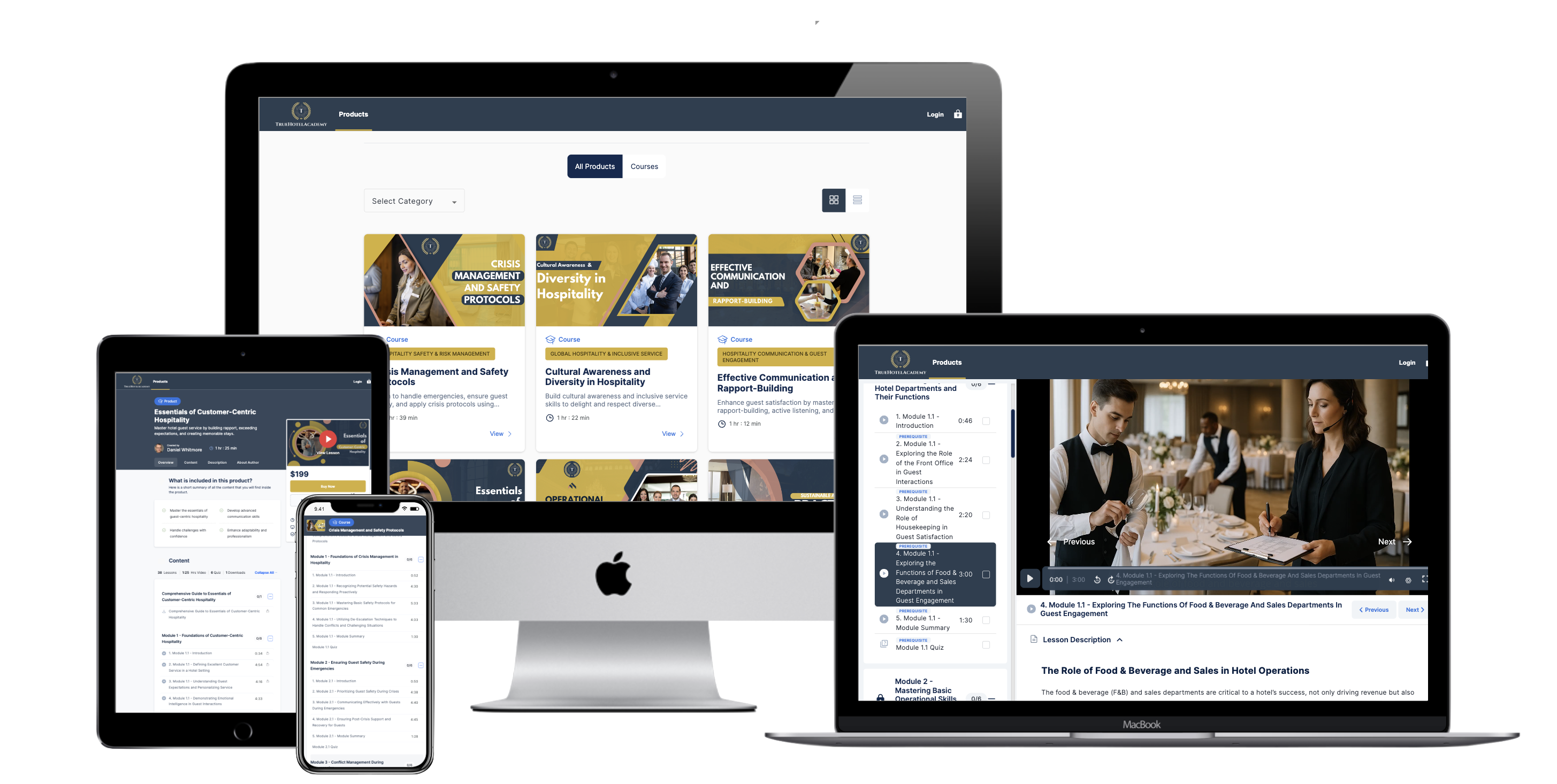
The Complete Hotel & Guest Service Mastery Bundle provides a comprehensive training system for hotel operations teams. It covers customer-centric hospitality, communication and rapport-building, operational fundamentals, crisis management, cultural awareness, sustainability practices, and the art of going above and beyond, all the areas outlined in this self-check and more.
Designed for busy hotel teams, the bundle is self-paced, online, and immediately actionable. Your team completes foundational training before their first shift, and experienced employees strengthen skills without disrupting operations. With fifteen team licenses included, your entire staff learns from the same framework and delivers the same standards.
Consistency isn't an accident. It's the result of intentional systems and thorough training.
If you're ready to turn these self-check insights into measurable improvement, explore the Complete Hospitality Mastery Bundle or browse individual courses that address specific gaps you've identified.
Your guests shouldn't have to wonder which version of your hotel they'll experience. And with the right training system in place, they won't have to.