You just hired a new front desk agent. They start Monday. You have approximately zero hours to train them properly because you're covering shifts, dealing with a plumbing issue in 204, and trying to finish payroll.
Sound familiar?
Most hotels handle this the same way: throw the new hire on the floor, pair them with whoever's working, and hope they pick things up quickly. Maybe they shadow for a shift or two. Maybe they get a quick walkthrough of the PMS. But actual structured training? That rarely happens.
The problem isn't that you don't want to train them. It's that you don't have time, and you need them functional yesterday.
Here's what usually happens instead: the new agent learns different habits from different people, picks up shortcuts that aren't actually best practices, and spends weeks feeling uncertain about whether they're doing things right. Guests notice the hesitation. You spend more time correcting mistakes than you would have spent training properly in the first place.
But what if there was a way to give new front desk staff a clear, structured path to follow in their first week without you needing to be there for every step?
Why "Shadow and Hope" Doesn't Work
Shadowing sounds efficient. Your new hire watches an experienced agent for a few shifts, observes how things are done, and gradually takes over tasks. In theory, it works.
In practice? It's inconsistent and incomplete.
If your new hire shadows Sarah, they learn Sarah's approach. If they shadow Mark the next day, they learn something completely different. One agent is warm and chatty, another is efficient and quiet. One offers upgrades proactively, another never mentions them. Your new employee doesn't know which approach is correct, so they develop their own hybrid version that may or may not align with your standards.
Worse, shadowing only covers what happens during those specific shifts. If no one complains, your new hire never learns complaint resolution. If no one asks about late checkout, they don't learn your policy. They're learning reactively instead of systematically.
The other issue is confidence. Watching someone do something and actually doing it yourself are very different. A new agent might observe 50 check-ins and still freeze when they have to handle one alone because they were never given the framework to work from.
What a Self-Training System Actually Looks Like
A self-training plan doesn't mean leaving someone to figure it out on their own. It means giving them a clear, step-by-step path they can follow independently, with checkpoints and guidance built in.
The goal is simple: by the end of their first week, your new front desk agent should feel capable, not confused. They should know your standards, understand the basics of guest service, and have a foundation they can build on without constant supervision.
Here's what that could look like in practice.
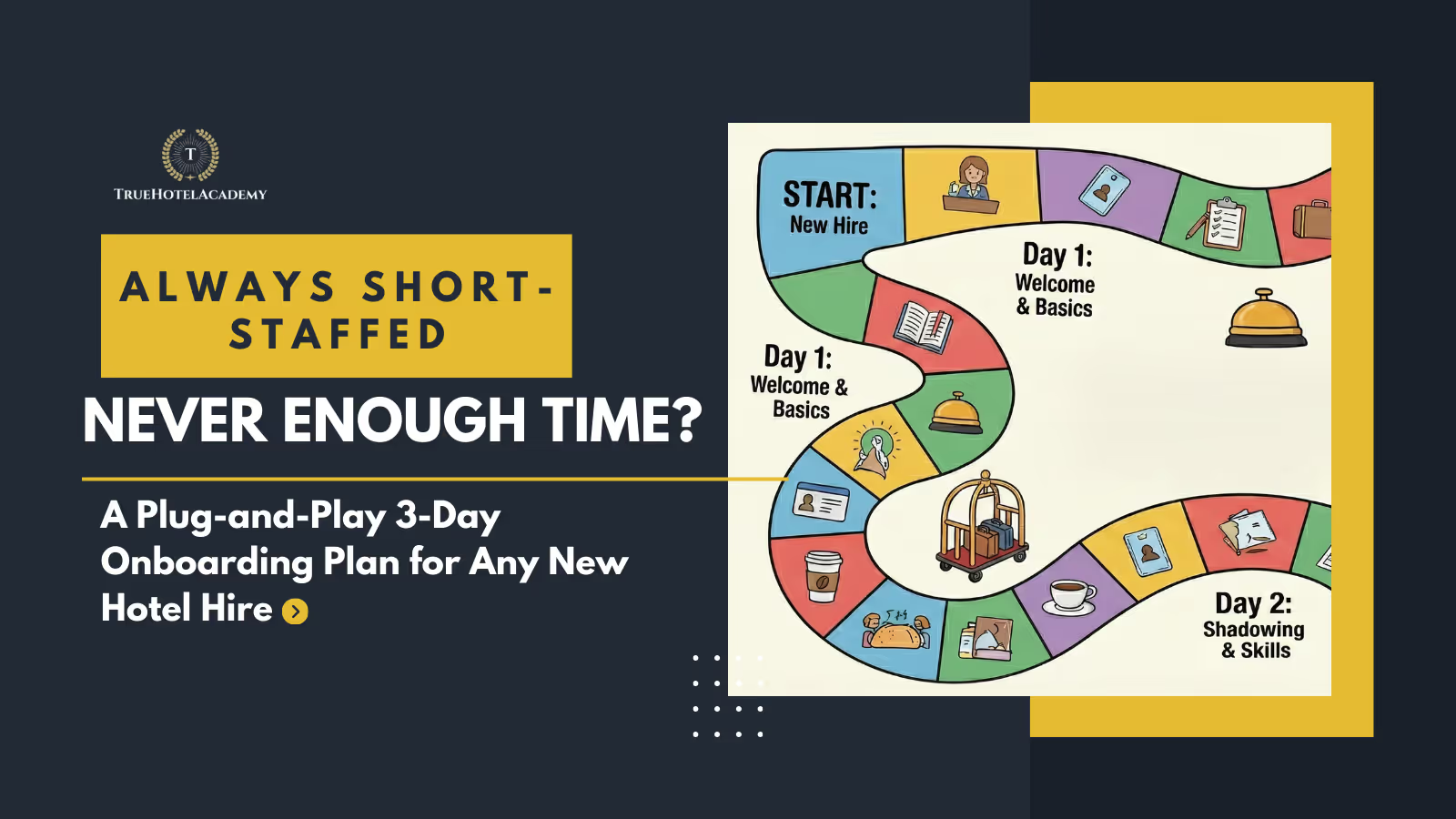
A Realistic 7-Day Training Flow
Day 1: Foundations and Property Familiarization
Start with the basics. Your new hire should spend their first day understanding the property, the layout, and the guest experience from check-in to checkout.
This includes walking through the building, knowing where rooms are located, understanding amenities (pool hours, breakfast times, parking setup), and getting familiar with the PMS. They're not handling guests yet. They're building the foundation.
If you have a structured training system, this is when they complete foundational modules on customer-centric hospitality and operational basics. They learn what excellent service looks like at your property and start understanding the guest perspective.
Day 2: Communication and First Impressions
Day two focuses on how to interact with guests. This isn't about scripts or fake enthusiasm. It's about understanding how to greet someone warmly, read their energy, and make them feel welcome.
Your new hire should learn the difference between being friendly and being intrusive, how to use a guest's name naturally, and how to set a positive tone in the first 30 seconds of an interaction.
This is also when they start practicing phone etiquette, how to handle reservation inquiries, and how to transfer calls appropriately. These are real scenarios they'll face immediately, so they need to practice them early.
Day 3: The Check-In Process
By day three, they're ready to learn check-in procedures step by step. Not just clicking buttons in the PMS, but understanding what information to verify, how to explain policies without sounding robotic, and what details guests actually care about (WiFi password, breakfast location, parking instructions).
They should practice several mock check-ins with a coworker or supervisor, focusing on consistency and clarity. The goal isn't perfection. It's competence and confidence.
Day 4: Problem-Solving and Service Recovery
Every front desk agent will encounter problems. A guest's room isn't ready. The WiFi isn't working. Someone is frustrated about a charge. Your new hire needs to know how to handle these situations before they happen, not during.
Day four covers the basics of service recovery: how to listen without interrupting, how to apologize genuinely, how to solve problems within their authority, and when to escalate to management. This builds confidence and reduces the number of issues that land on your desk unnecessarily.
Day 5: Policy Knowledge and Upselling
Policies exist for a reason, but enforcing them poorly creates friction. Your new agent should understand not just what the policies are (cancellation terms, pet fees, early check-in rules), but why they exist and how to explain them in a way that doesn't feel confrontational.
This is also when they learn how to offer upgrades, late checkouts, or additional services naturally. Upselling isn't about being pushy. It's about recognizing opportunities and presenting options that genuinely improve the guest experience.
Day 6: Shift Transitions and Team Coordination
Front desk work doesn't happen in isolation. Your new hire needs to understand how to hand off information between shifts, how to communicate with housekeeping and maintenance, and how to document issues properly.
Day six focuses on teamwork and operational flow. They learn how to leave clear notes, what information matters for the next shift, and how to ask for help when they're unsure.
Day 7: Confidence Building and Real Scenarios
By the end of the week, your new agent should be ready to handle real shifts with supervision nearby but not hovering. Day seven is about putting everything together, handling actual guest interactions, and troubleshooting any remaining gaps.
This is also when they complete any final training modules on topics like cultural awareness, crisis protocols, or going above and beyond in service. They're building a complete skill set, not just learning how to check someone in.
Why This Works Better Than Traditional Onboarding
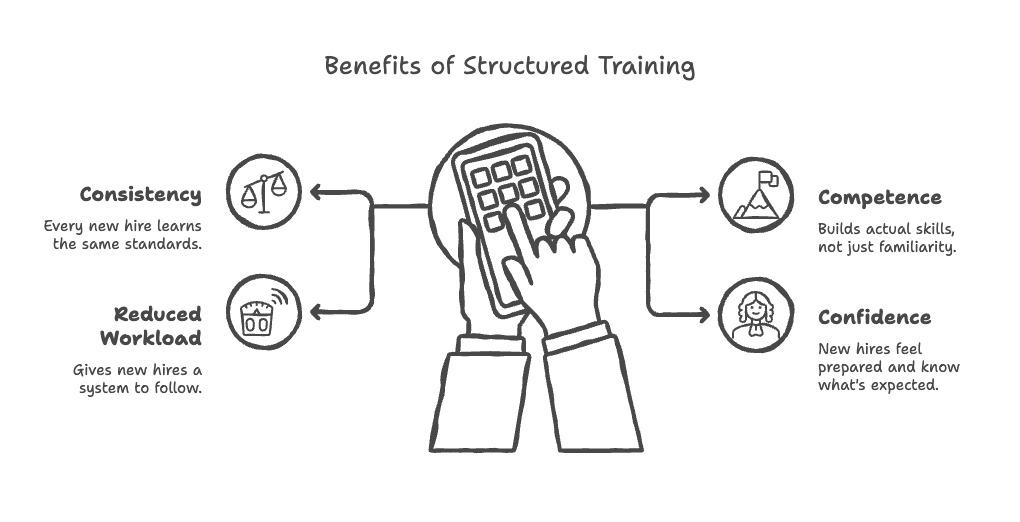
This kind of structured, self-guided training does a few things that traditional shadowing doesn't.
First, it's consistent. Every new hire goes through the same process and learns the same standards, regardless of who's working that week.
Second, it builds actual competence, not just familiarity. Your new agent isn't just watching someone else work. They're actively learning, practicing, and developing skills they can use independently.
Third, it reduces your workload. Instead of spending hours walking someone through every scenario, you're giving them a system to follow. You're still available for questions and coaching, but you're not the training program.
Finally, it creates confidence. A new hire who completes structured training feels prepared. They know what's expected of them, they've practiced the skills they need, and they're not guessing their way through every interaction.
Building This Into Your Operations
The reality is that most hotel managers don't have time to create a comprehensive training system from scratch. You're already stretched thin, and building training modules on top of everything else isn't realistic.
That's where a ready-made system makes sense.
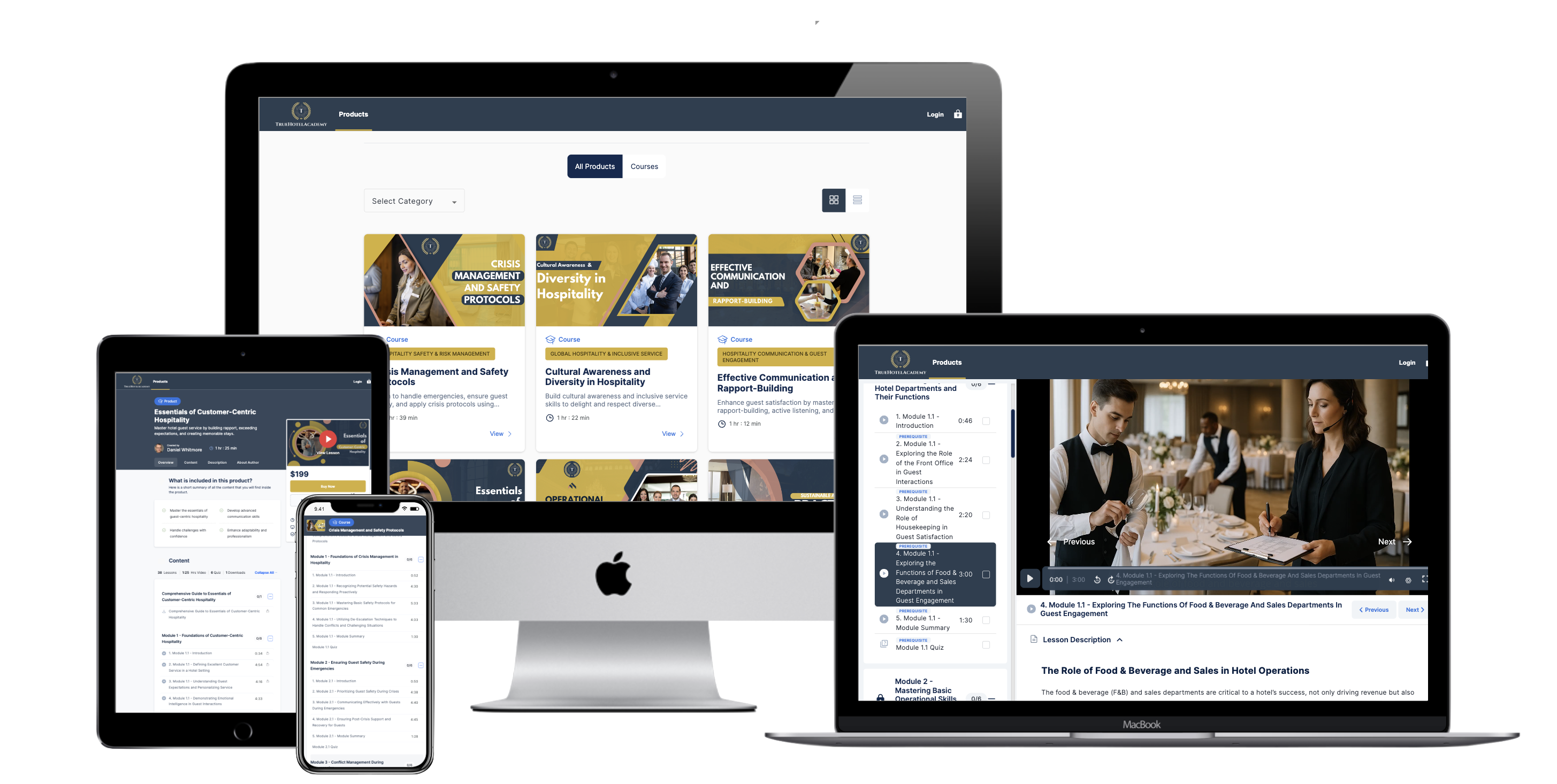
The Complete Hotel & Guest Service Mastery Bundle was designed specifically for this situation. It provides everything outlined in this 7-day plan (and more) in a self-paced, online format that new hires can complete before or during their first week.
It covers customer-centric hospitality, effective communication, operational fundamentals, crisis management, cultural awareness, and the art of going above and beyond. Your new front desk agent learns from the same system as everyone else on your team, which means they're delivering the same standards from day one.
The bundle includes 15 team licenses and 12-month access, so you can use it for onboarding every new hire throughout the year. It's not a replacement for on-the-job experience. It's the foundation that makes on-the-job experience actually productive.
Your new hires feel more confident. Your team delivers more consistent service. And you spend less time fixing preventable mistakes.
If you're tired of the "shadow and hope" approach to training, explore the Complete Hospitality Mastery Bundle and see how structured, self-guided training changes the way new hires get up to speed.
You don't have time to train the old way. But you also can't afford not to train at all.
This is the middle ground that actually works.